| Fast Load Version | S P E C I A L  T R A V E
L R E P O R T T R A V E
L R E P O R T |
|
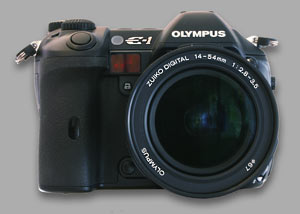
Olympus
E-1
To establish a place in the hearts and prints of professionals, Olympus boldly embraced--and largely developed--a new format that was not a conversion from a 35mm film history. That format is the Four Thirds system. A new set of specifications for image chip size, lens mount bayonet and internal systems all culminating in an optimized dSLR form that lets each element perform at maximum capability and opportunity to evolve.
As you handle the E-1 for the first time, everything about it feels completely right. It's solid, ergonomic and quick to learn. Every control you will wish to access is immediately touchable and prosumer features like Scene modes and Special Effects are absent. Exposure modes are marked P, S, A and M without resorting to clever re-interpretations of these commonly understood functions (such as Canon's, P, Tv [Time Value], Av [Aperture Value] and M markings they offer to establish an exclusive nomenclature at the expense of clarity) and each of the Olympus settings can not be accidentally twirled to a different position because they lock in place with a safety catch. Battery and CF-card doors latch closed, too, so you will never accidentally open one. The Forbidden City has some forbidding pavement. Kids see this as an opportunity to engage in some otherwise forbidden footwork.
In extra dim light, ISO 3200 and f/2.8 climb right into a container of magic medicinal tea clusters in a tea tasting shop. It's no secret among professionals that a 3:4 aspect master image is going to likely be less cropped for display in its final destination. A recent survey of the May 2004 National Geographic Magazine saw 68 images 3:2 in aspect or wider and 128 closer to 3:4 or squarer including display ads and editorial images. That said, I find that I crop squarer and wider nearly equally as I pare down images into their essential story-telling frames. If anything, statistically more of my E-1 images felt correctly framed in the camera. Two lenses traveled to China with the E-1. Most often the 14-50mm f/2.8-3.5 Zuiko 3.6:1 zoom with its 28-100mm (equivalent) range got the shot. Extending that range, the 50-200mm f/2.8-3.5 Zuiko came into play especially when shooting candids. Here are some of the results;
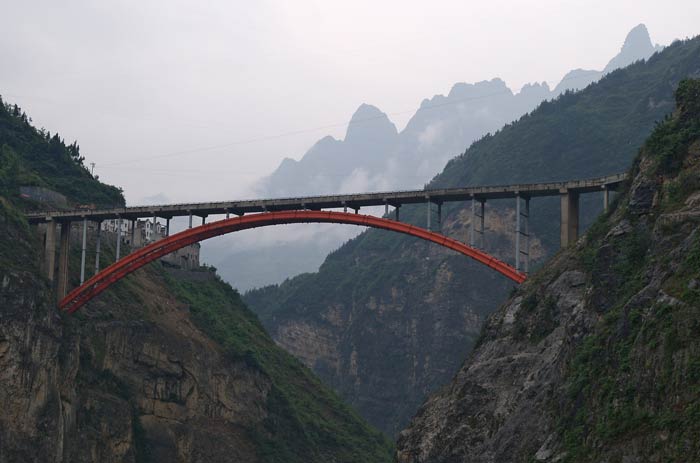
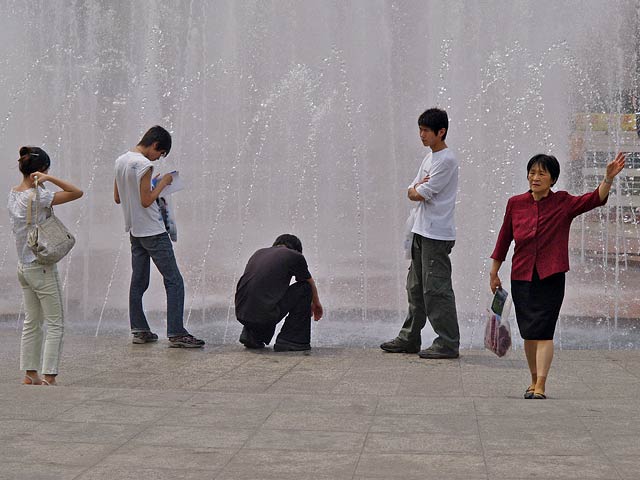   Shanghai adults react differently to fountains than children do. No question as to who enjoys them more. 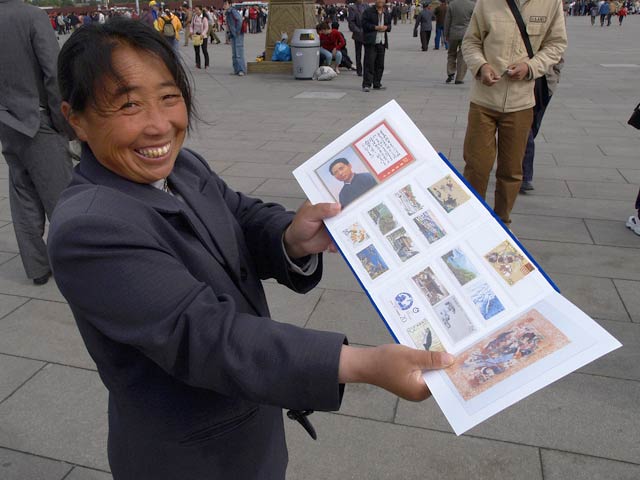 Collect them all! No visit to Beijing is complete without these stamps. 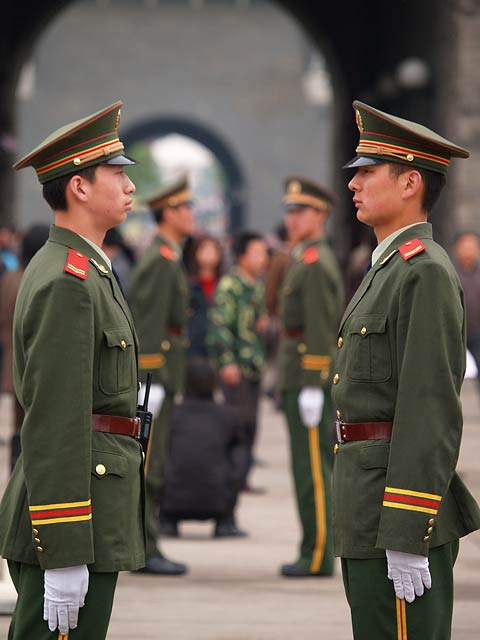  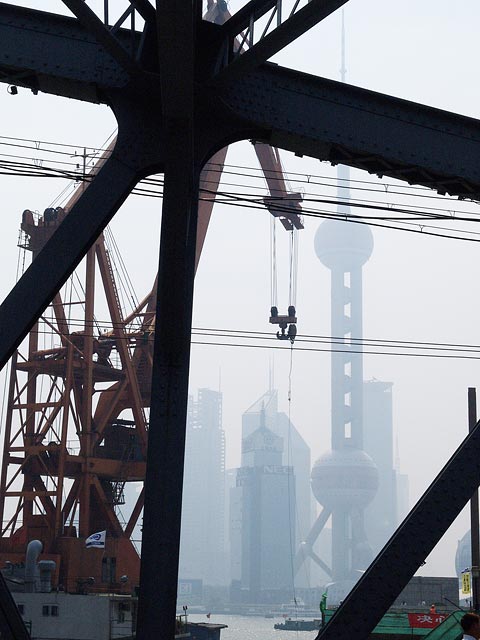 Tricks of the light.     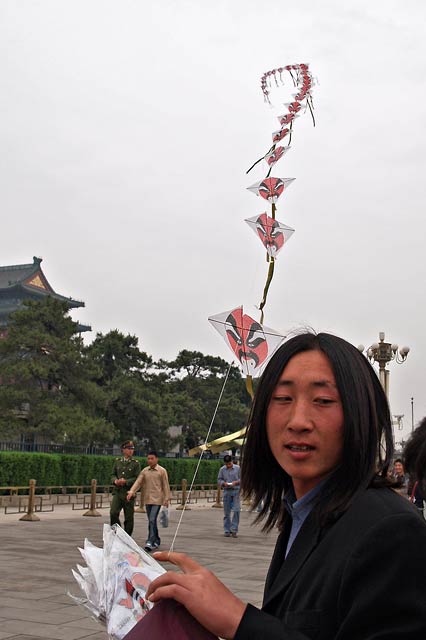  Candid moments wait for no photographer. Nor should they.   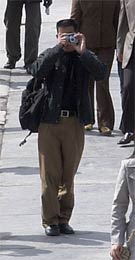 Find these people in the image below and win bragging rights. 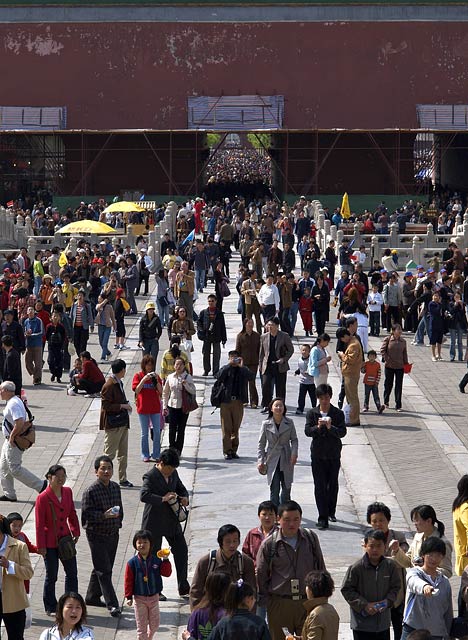 One was easy. The other two, however... 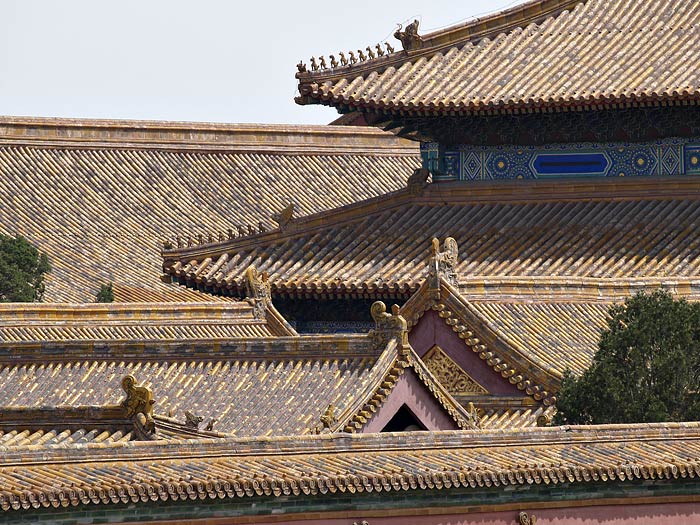 A symphony of roofs. 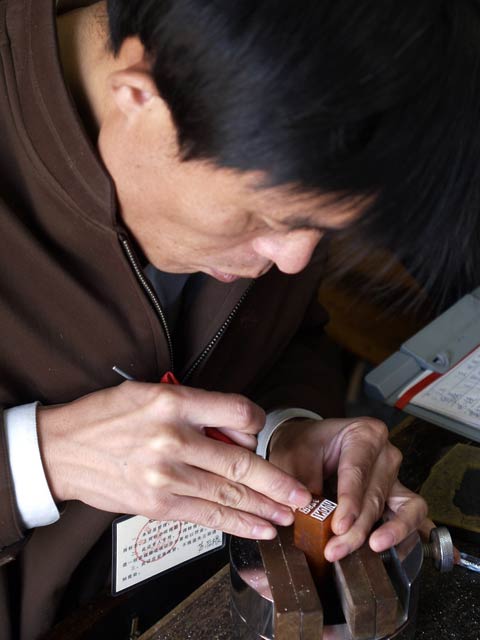 Carving the iNova chop. 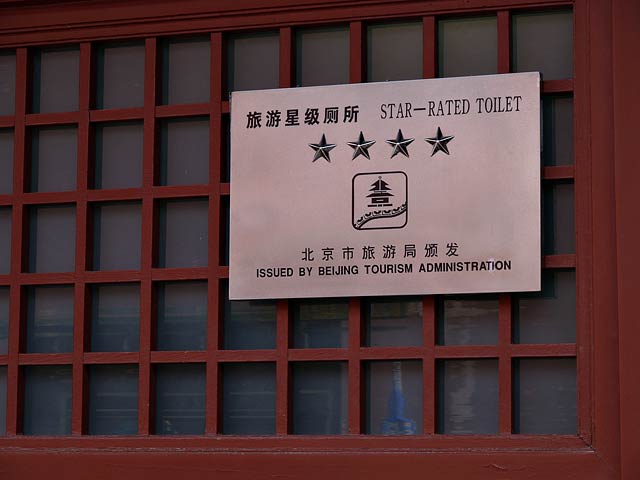 Always a comforting reassurance. 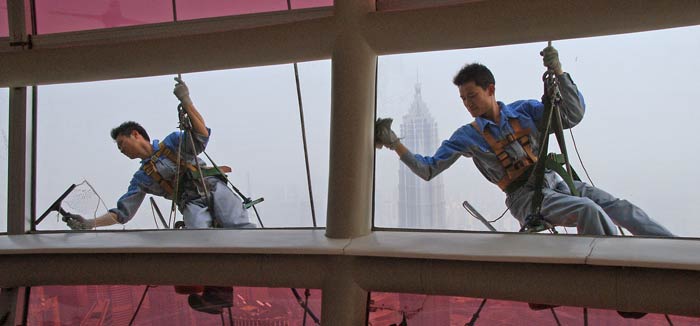 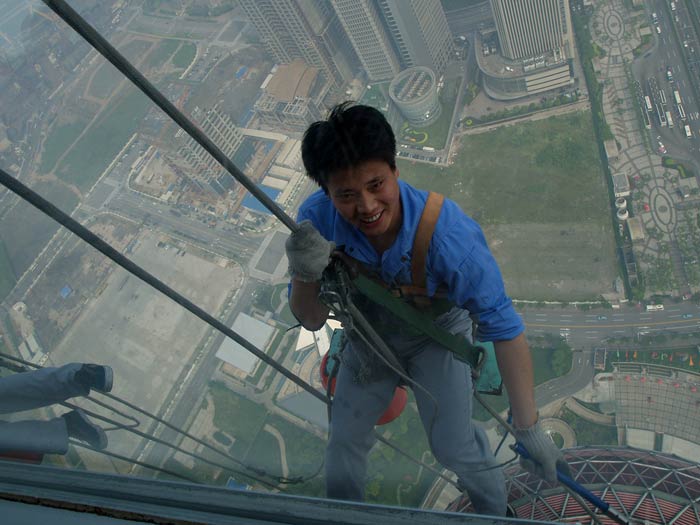 Is this the coolest job in the world, or what? 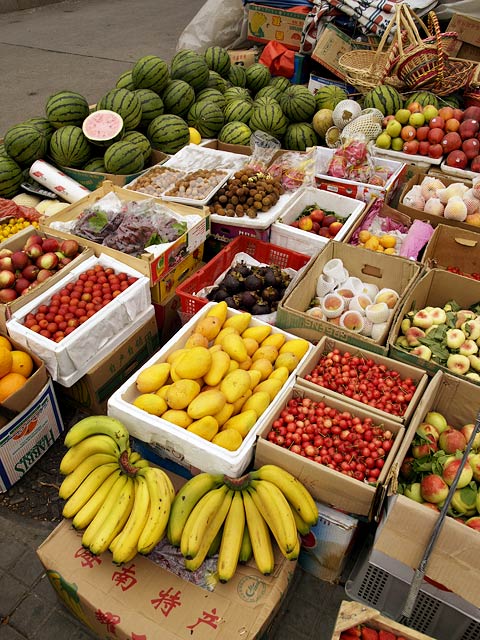     No problem. Fresh produce is easy to find all over China.  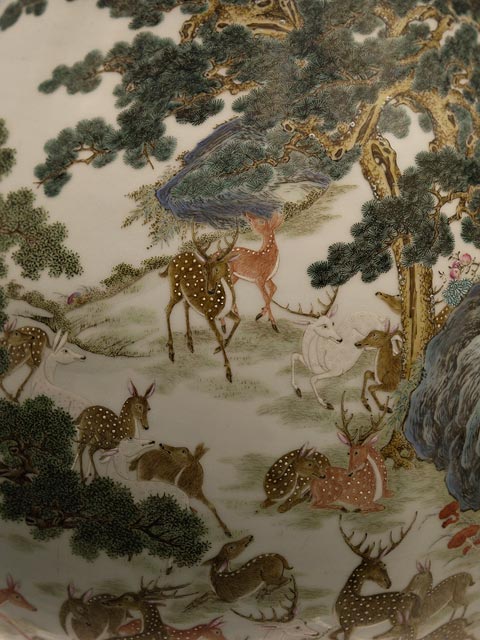  Inspiration for art is in the land. 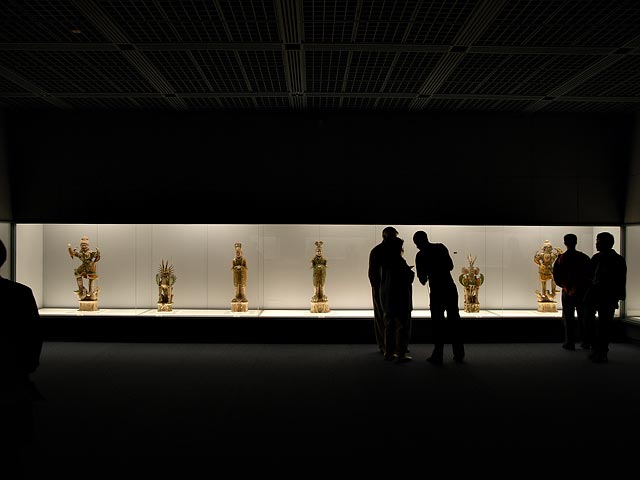 With good hand-held stability, museum interirors are at your fingertips.  ...as are the windows of the night.        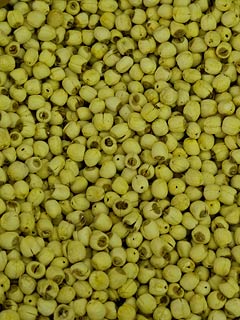  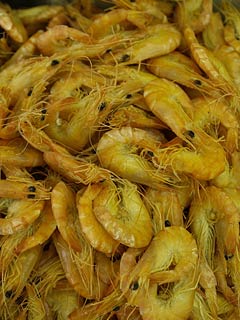  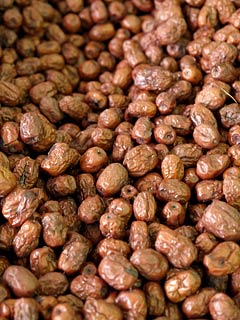 Working with the E-1
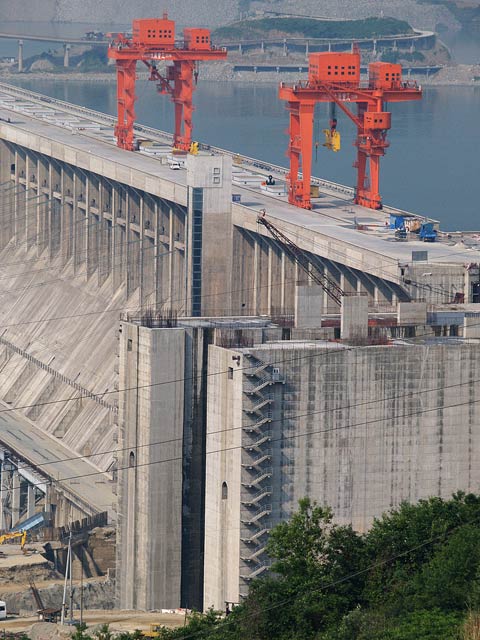
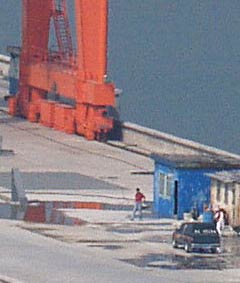
How a camera feels and its ergonomics of operation are of vital importance to fast-working professionals, of course, but these qualities mean a lot to anybody who is able to see the moment, bring the camera up quickly and get the shot at the right instant. Three Gorges Dam. It's huge and difficult to see in scale. But if you spot the tiny figure in the shot left, you may be able to see where he is in the full image at right. Like many images reproduced at this size on this page, opening the image in a new browser window will double the scale of the embedded image. Photography is about time and light and in this case "time" doesn't mean shutter speed. If you wish to capture pictures of Emily with her back to the local impressive monument, then you don't need a camera that delivers fast response, but if you wish to catch that kid over there with her stretched yawn, your equipment better be as fast as your retina. And the E-1 is a no-excuse, professionally fast camera. Internally, the E-1 has a supersonic wave image chip anti-dust feature and indeed, through the entire trip, no sensor dust blobs were detected, just good, clear shots. 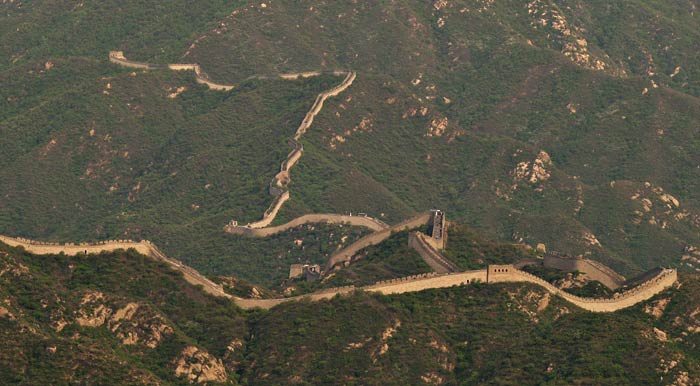 Badaling Great Wall. Olympus E-1 / 200mm tele zoom. In short, the E-1 was able to achieve that most desired of goals in a working camera: invisibility. To the photographer a camera needs to ultimately become as invisible to the image gathering process as a hammer is to a carpenter. The only time I ever had to think about the camera was if I decided to do something out of the mainstream.
While shooting a Chinese Historical Costume show (left), I attached the flexible, swiveling Olympus FL-50 flash unit to the camera hot shoe and kept on shooting. This unit swivels so you can bounce light off the ceiling while shooting vertical shots. Nice. Originally $1700 for the body alone, price drops in this camera have occurred recently. Today the body can be had for around $1000 and the short zoom sits about $400 MSRP through the Internet. The big tele zoom from similar places is around $800. Caveat emptor. These could very well be Gray Market prices and cameras purchased that way often enjoy support only when returned to the country of origin. Months later your camera may find its way back to you good as new if it ever must go out for repair. 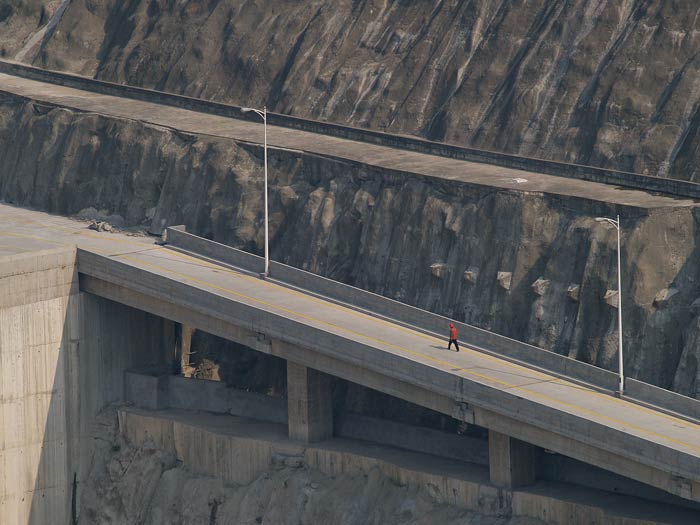 Human scale.  One side benefit to the Three Gorges Dam has to do with power. Somewhere between 10 and 15% of China's electricity will flow out of it. The big advantage behind purchasing your camera from a live human in a town near you comes in terms of support should anything ever go wrong and your ability to pester the sales people endlessly when a new lens or hidden feature becomes the topic of interest.
Reprinting except for newsworthy mention and brief quotes are by permission only. |
 Olympus is famous for its 35mm film cameras but
never quite made it into the ranks of 35mm automated SLRs. Their
point and shoot models won a huge audience, and their digital
compact cameras are among the best in the world, but until now,
they have not competed with Canon and Nikon for the dSLR market
that feeds professional photographers.
Olympus is famous for its 35mm film cameras but
never quite made it into the ranks of 35mm automated SLRs. Their
point and shoot models won a huge audience, and their digital
compact cameras are among the best in the world, but until now,
they have not competed with Canon and Nikon for the dSLR market
that feeds professional photographers.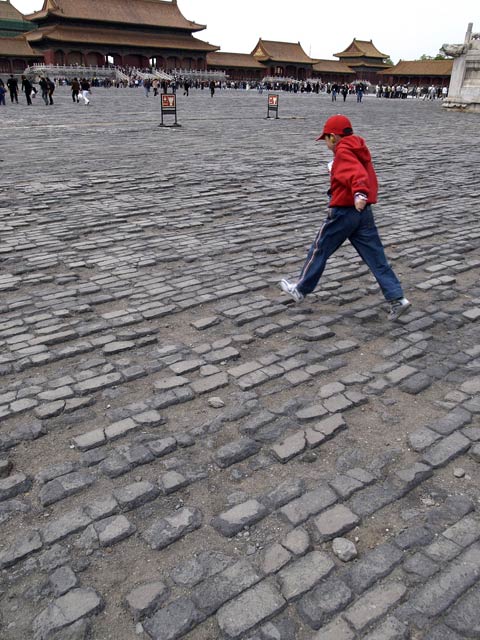 The lens mount is huge compared to the image chip
size. Mirror and viewfinder physics are smaller than those on
all other dSLRs offering clearance for optics that sit further
back into the camera body. Although the E-1 is about the same
size as Nikon and Canon dSLRs, future cameras can presumably
live up to the Four Thirds system specifications in smaller,
lighter packages.
The lens mount is huge compared to the image chip
size. Mirror and viewfinder physics are smaller than those on
all other dSLRs offering clearance for optics that sit further
back into the camera body. Although the E-1 is about the same
size as Nikon and Canon dSLRs, future cameras can presumably
live up to the Four Thirds system specifications in smaller,
lighter packages. The Four Thirds sensor is 5.1 Megabytes in a
 It was good to have the experience of a top-quality
dSLR in hand for comparison to the Canon Digital Rebel.
It was good to have the experience of a top-quality
dSLR in hand for comparison to the Canon Digital Rebel.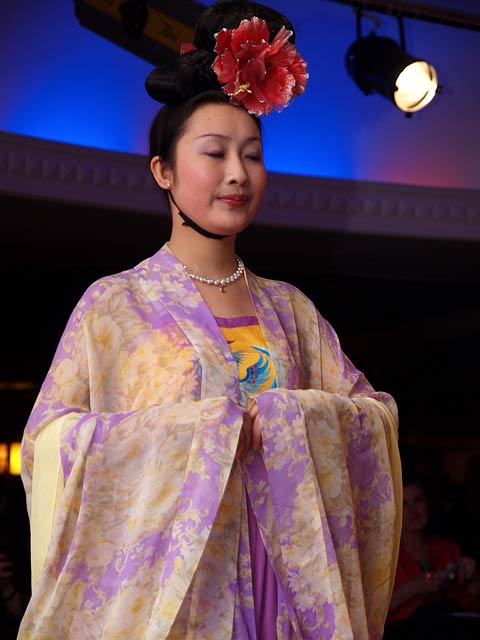
 Of all the dSLRs available today, the E-1
and Sigma are the only ones without an on-board flash, and being
the sort of photographer I am, that never actually became a problem.
My use of on-camera flash units is largely as an outdoor fill
for contrasty lighting but when I worked with the E-1, the situation
simply never came up.
Of all the dSLRs available today, the E-1
and Sigma are the only ones without an on-board flash, and being
the sort of photographer I am, that never actually became a problem.
My use of on-camera flash units is largely as an outdoor fill
for contrasty lighting but when I worked with the E-1, the situation
simply never came up.
 Get
the eBooks
Get
the eBooks